The book is in Russian language.
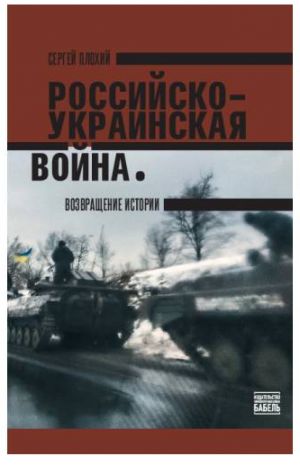
An authoritative history of Europe's largest military conflict since World War II, from the New York Times best-selling author of The Gates of Europe.
Despite repeated warnings from the White House, Russia's invasion of Ukraine in February 2022 shocked the world. Why did Putin start the warand why has it unfolded in previously unimaginable ways? Ukrainians have resisted a superior military; the West has united, while Russia grows increasingly isolated.
Serhii Plokhy, a leading historian of Ukraine and the Cold War, offers a definitive account of this conflict, its origins, course, and the already apparent and possible future consequences. Though the current war began eight years before the all-out assaulton February 27, 2014, when Russian armed forces seized the building of the Crimean parliamentthe roots of this conflict can be traced back even earlier, to post-Soviet tensions and imperial collapse in the nineteenth and twentieth centuries. Providing a broad historical context and an examination of Ukraine and Russia's ideas and cultures, as well as domestic and international politics, Plokhy reveals that while this new Cold War was not inevitable, it was predictable.
Ukraine, Plokhy argues, has remained central to Russia's idea of itself even as Ukrainians have followed a radically different path. In a new international environment defined by the proliferation of nuclear weapons, the disintegration of the post-Cold War international order, and a resurgence of populist nationalism, Ukraine is now more than ever the most volatile fault line between authoritarianism and democratic Europe.
Сергей Плохий: "Я уже писал в первом издании книги, и должен повторить: война еще не окончена - возможно, до её окончания ещё очень далеко, и мы до сих пор не знаем, как именно она завершится. Что можно сказать с большей уверенностью, так это то, что война глубоко изменила не только регион, но и весь мир. Нет пути назад к довоенному статус-кво. Также ясно, что облик послевоенного мира будет в значительной степени зависеть от исхода войны. Победа России нанесёт непоправимый удар по международному порядку, основанному на правилах, и сделает возможным возникновение нового миропорядка, в котором правят "великие державы-изгои" - и этот сдвиг уже происходит. Напротив, победа Украины и сохранение её суверенитета дали бы надежду на то, что справедливый международный порядок может быть восстановлен из руин, оставляемых Россией в её попытках уничтожить одно из государств Центральной Европы..."
Перевод с английского: Александр Туров
Фото: Евгений Фельдман
Sergej Plokhij: "Ja uzhe pisal v pervom izdanii knigi, i dolzhen povtorit: vojna esche ne okonchena - vozmozhno, do ejo okonchanija eschjo ochen daleko, i my do sikh por ne znaem, kak imenno ona zavershitsja. Chto mozhno skazat s bolshej uverennostju, tak eto to, chto vojna gluboko izmenila ne tolko region, no i ves mir. Net puti nazad k dovoennomu status-kvo. Takzhe jasno, chto oblik poslevoennogo mira budet v znachitelnoj stepeni zaviset ot iskhoda vojny. Pobeda Rossii nanesjot nepopravimyj udar po mezhdunarodnomu porjadku, osnovannomu na pravilakh, i sdelaet vozmozhnym vozniknovenie novogo miroporjadka, v kotorom pravjat "velikie derzhavy-izgoi" - i etot sdvig uzhe proiskhodit. Naprotiv, pobeda Ukrainy i sokhranenie ejo suvereniteta dali by nadezhdu na to, chto spravedlivyj mezhdunarodnyj porjadok mozhet byt vosstanovlen iz ruin, ostavljaemykh Rossiej v ejo popytkakh unichtozhit odno iz gosudarstv Tsentralnoj Evropy..."
Perevod s anglijskogo: Aleksandr Turov
Foto: Evgenij Feldman